Posts

Beyond The Frame | Yan Yang Tian Troupe | GFX 50s
Image
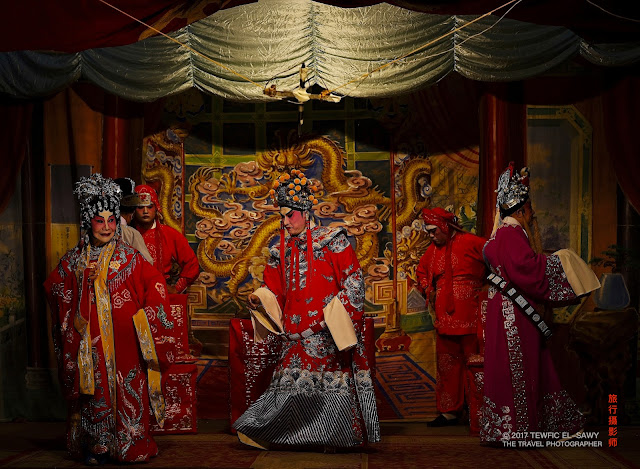
Photo � Tewfic El-Sawy | All Rights Reserved Although the Fuji GFX50s might not really be the most appropriate format to photograph theatre and opera, it produced interesting images while using it to photograph a live performance by the Yan Yang Tian opera troupe in at the    Leng Eng Tian Khiew Ong Tai Tay temple  in Kuala Lumpur during the annual Taoist Nine Emperor Gods Festival.  For nine days, Taoists gather at various temples around the country to celebrate the Nine Emperor Gods festival, which begins on the eve of the ninth month of the lunar calendar. The troupe performs traditional Cantonese opera, and has been on stage since its founder opera troupe owner Elizabeth Choy was 7 years old. Now in her late eighties, she is considered a treasure by the Chinese-Malay communities in Malaysia as well as those in neighboring countries. While the popularity of Cantonese opera has dwindled, especially among the young, her troupe has continued to perform in local ...

Ye Hong Qi | The Miao Portraits

Image
Photo � Ye Hong Qi - All Rights Reserved It's been a few weeks since my last post...but I needed a break to re-energize my blogging appetite, and with my time swallowed up with a forthcoming photo book, and the incessant demands of social media, blogging took a back seat. However, I chanced on wonderful images by the Chinese photographer Ye Hong Qi whose long term project " The Portraits of Chinese Miao Nationality " (???????) is just a delight for those who are interested  -not only in portraiture- but in anthropology and ethnic minorities. Ye Hong Qi tells us that he started his project in 2012, seeking to document the Miao culture through portraits made in situ, eschewing artificial lights and other devices. The Miao is an ethnic group belonging to South China, and is recognized by the government of China as one of the 55 official minority groups. They live primarily in southern China's mountains, in the provinces of Guizhou, Yunnan, Sichuan, Hubei, Hunan, Guangxi...

Faces of Chinese Opera

I've been photographing Chinese opera performers at performances and backstages in New York City's Chinatown, various locations in and near Kuala Lumpur and in Shanghai for the past 18 months or so. My intention is to eventually produce a photo book of these photographs; a long term project if there was ever one since Chinese opera is a subject of immense complexity and depth. Influenced by the square format portraits by Andres Serrano (see my previous blog post), I chose 24 portraits of artists (12 male and 12 female characters) who performed in Cantonese, Hokkien and Jingj� performances. I mentioned the complexities of Chinese opera; it is said that there are as many variants as dialects in China. For instance, there's the Beijing Opera , known also as Peking Opera ?? (Jing Ju) which I've photographed in Shanghai;  Cantonese Opera , known as ??   Yue Ju, which is popular in the Canto nese speaking regions, such as Guangdong, Guangxi, Hong Kong, Macao...

Andres Serrano | Made In China

Image
Photo �  Andres Serrano | All Rights Reserved Readers of this blog are well aware of my current "chinoiserie" phase, of my interest in creating Chinese fashion themed multimedia stories and of my working on a photo book on Chinese Opera. So it's with great pleasure that I discovered the work of the famous photographer Andres Serrano, and his wonderful portraits of Chinese men and women in traditional garb and costumes in his Made In China gallery. One of the most famous traditional Chinese clothing type is the Han Fu style. This is the type of dress worn by the Han people from the Yellow Emperor (about 2698 BC) till the late Ming Dynasty (1368 - 1644 AD). It became known as the Han Fu (�fu� means �clothes� in Chinese) because the fashion was improved and popularized during the Han Dynasty. It is usually in the form of long gown, cross collar, wrapping the right lapel over the left, loose wide sleeves and no buttons but a sash. My very favorite is the qi pao or cheongsam ...

POV : William E. Crawford | Hanoi Streets

Image
Photo � William E. Crawford | Courtesy The New York Times I don't recall writing a blog post about an article that appeared on The New York Times' Lens feature, but I could not let the wonderful photography of William E. Crawford on Hanoi Streets go without giving it its due merit on the pages of this blog. One of the photographs that I couldn't stop looking at is of this Vietnamese general. I have no idea who he is or what his history may have been...but I've met Vietnamese men (and women) of his age with similar facial expressions, whose astounding gentleness and courtesy to me -as a visitor to their country- are the most rewarding experiences I took away from my travels in Vietnam. In the Lens article, Mr. Crawford is quoted as saying  "despite the embargo and the wounds of the American War there was no obvious anti-American hostility ... the lack of hostility towards Americans, at least in the North, was a relief to me." This is so true! Everywhere I went...

Jaranan In Java | Jay Tindall

Image
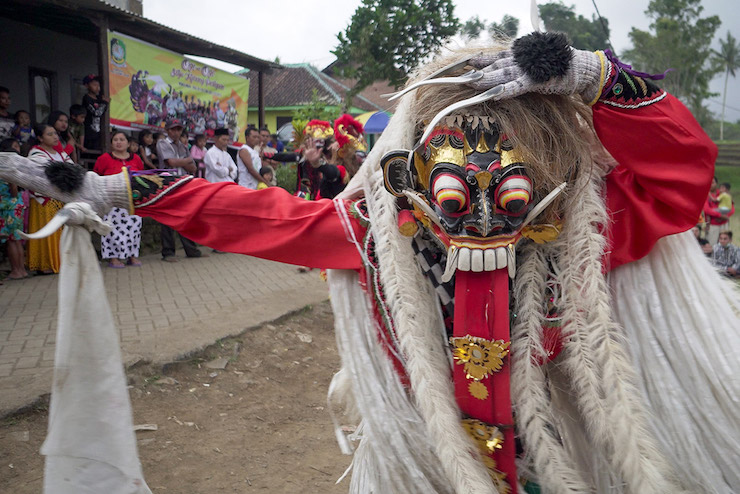
Photo � Jay Tindall- All Rights Reserved I've always been interested in documenting the unusual or lesser known religious traditions (especially those of Asia) whether these were derived from mainstream religions or were stand-alone. It was this interest that guided me to photograph a number of such traditions, including Vietnam's �?o M?u which I documented for two years and produced a photo book of which I'm very proud of. It's with this frame of mind that I discovered the tradition of Jaranan; an age old Javanese tradition though the photo blog post  Exorcism In The Volcano's Shadow by photographer/entrepreneur Jay Tindall. His blog post describes this tradition as "...an intense ritual of spiritual passion and trance-induced savagery", so I won't duplicate the interesting contents of his post, except to say that Jaranan is a dramatic genre of a horse dance performed in Java. The most prominent feature of these performances is the trance dancers who...

Beyond The Frame | Qu Hui | X-Pro2

Image
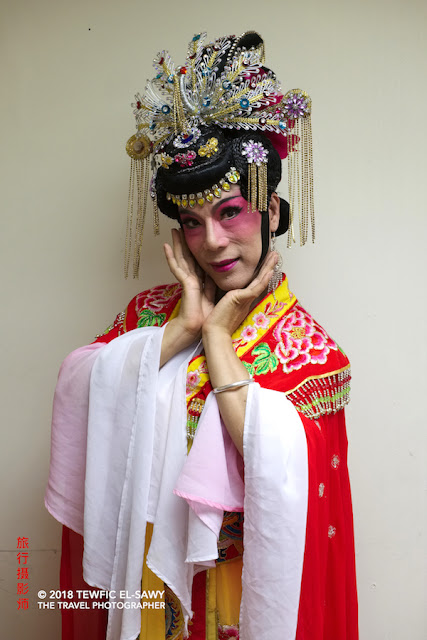
Photo � Tewfic El-Sawy | All Rights Reserved I was officially recognized as the photographer for The Shade of Butterfly & The Red Pear Blossom opera at the community center theater in NYC's Chinatown. It was the first opera of the season, and is one of the most famous Cantonese operas, and described as a masterpiece. The plot centers on a scholar Yu-chow and the courtesan So-chow who write poems to each other and fall in love despite having never met. The scholar is attached to the court of a treacherous high official who schemes to keep the lovers at bay. The two lovers meet in the final act much to the delight of the audience. I was introduced to Mr. Qu Hui, a mainland Chinese performer, who was to perform one of the lead roles in the opera, and also to sing a few more modern songs. A charismatic tall man, seemingly very comfortable in high heels, he posed for my camera for a few minutes before the show. Cross-dressing has been an integral part of Chinese Opera from its ...

The Legend of Hua | Multimedia

I have now completed producing 'The Legend of Hua', an audio slideshow (aka photo film) which recounts in just over 3:30 seconds (reportedly today's upper limit for our attention span) the story of Hua. The story   meshes the topic of ghosts, opium, Shanghai in its 1930's heyday, traditional Chinese cultural and supernatural elements; all revolving around a plot of betrayal. The plot is influenced by a 1988 movie by Stanley Kwan (in turn based on a novel by Li Pi-Hua (also known as Lillian Lee), one of the most influential Chinese TV writers, film writers and reporters. I've recently produced a handful of audio slideshows that involve imaginary plots during the 1930s in Shanghai, featuring friends who take on the roles of wronged women...possibly wronged by either Chinese men or laowais/gweilos .  My long-time readers know that I've embarked on a  chinoiserie "phase" for quite a while now; a phase fueled  by my travels over the past few years to Hanoi...

Beyond The Frame | Hua | GFX50s

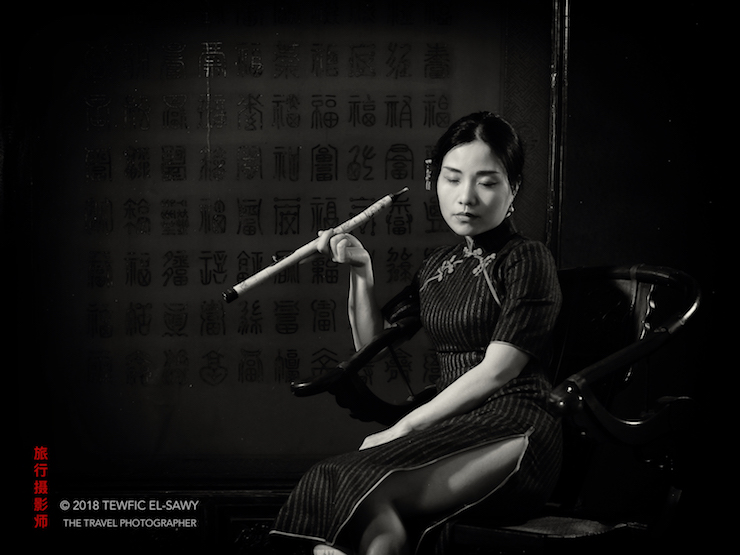
I've been absent from this blog for a while due to 'busy-ness', and working on a new audio-slideshow (aka photo-film) titled "The Legend of Hua"...which turned out to be more time-consuming than I anticipated, due to the various audio tracks that had to mesh with still photographs. In the meantime, I uploaded a sample of the still images from the soon-to-be released audio slideshow unto my Exposure website, however I chose to post process these differently from those in the slideshow.  I had read that a photographic technique merging silver printing with charcoal painting was widely popular in the 1920-1930s Shanghai, so I explored various modern digital post processing ways to try and imitate that 'look' as closely as I knew how. After a number of failed attempts, I chose a process which mixes a combination of my own settings using two imaging softwares; ON1 Photo Raw 2018 and Iridient Developer 4. When I was satisfied with the resultant 'look', I...

POV: The Human World Photo Contest | Winning Entry

Image
Photo � Supriya Biswas | Courtesy The Human World The Human World photography contest  just announced its overall winner; Supriya Biswas with the above monochrome photograph, and four honorable mentions namely Thigh Wanna, Shoeb Faruquee, Robin Yong and Edoardo Agresti. The Human World photography contest is organized by Matteo Vegetti, an Italian photographer, and is in its fourth annual iteration.  As one of the contest's judges, I was gratified that the winning image was one of my top choices...and I'm glad the remaining judges on the panel seemed to have thought so as well. By the way, these judges are  Diane Durongpisitkul, Jing Chen, Kim Hak, Sarah Trevisiol, Probal Rashid, and Gunarto Gunawan...a truly international panel representing the USA, Thailand, China, Cambodia, Italy, Germany, India and Indonesia. My blog's readers may be interested as to the reason for this photograph being one of my top choices...and in all candor, I struggl...

Beyond The Frame | Ren Li Fung | Fuji GFX50s

Image
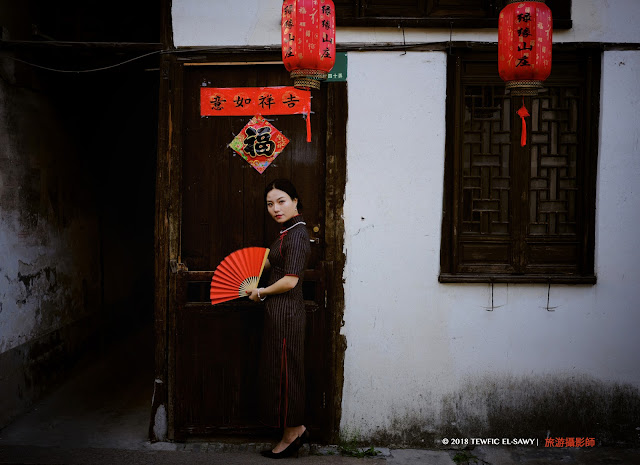
Photo � Tewfic El-Sawy | All Rights Reserved I'm currently working on a rather intricate "photo film" or audio slideshow that will mesh the topic of ghosts, opium, Shanghai in its 1930's heyday,  traditional Chinese cultural and supernatural elements; all revolving around  a plot of betrayal. The plot itself is influenced by a 1988 movie by Stanley Kwan (in turn based on a novel by  Li Pi-Hua (also known as Lillian Lee), one of the most influential Chinese TV writers, film writers and reporters.  It's funny how one thing leads to another...while planning my fortnight in Shanghai and preparing for my lecture and street photography workshop some six or seven weeks ago, I was invited to a number of WeChat groups by Yi Yi; a previous acquaintance from that super-modern city who would work with me on the second iteration of The Girl of Nanjing Road .  Through these WeChat groups, I connected with Ren Li Fung ("Betty") who seemed very popular as a qi pao mode...

Poy Sang Long | Reuters' Wider Image | Jorge Silva

Image
Photo � Reuters/Jorge Silva - Al Rights Reserved I was planning to attend the Poy Sang Long celebration in Chiang Mai in early April, but the opportunity of my Shanghai lecture and workshop intervened, and so I had to postpone traveling to northern Thailand till next year. However, I viewed the recent wonderful photo essay and reportage titled Beloved Princes Become Buddhist Novices by Jorge Silva of the annual event which was featured in Reuters' Wider Image blog, and it definitely reaffirmed my intention to attend the celebration in April 2019. The essay/reportage is quite thorough in explaining what Poy Sang Long is all about, but here's more information: The days of April 4-6 are usually the time for the three-day festival of Poy Sang Long when, in the city of Chiang Mai, pre-teen boys are inducted as Buddhist novices. On the first day of the 3-day festival, the youngsters are in the midst of family feasting and gift giving before they are escorted to the temple to have t...

The Girl of Nanjing Road : Part II

Image
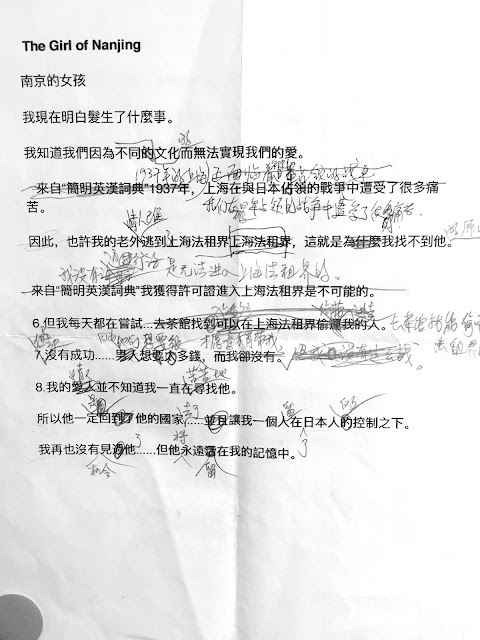
N anjing Road by Tewfic El-Sawy on Exposure I completed another personal project whilst in Shanghai a couple of weeks ago. It's a sequel to The Girl of Nanjing Road (Part 1) which featured Yi Yi as the main (and only visible protagonist). Both involve Yi Yi as a girl from Shanghai who's in a relationship with a foreign resident of that city during its glorious heydays of the 1930s, and into the start of the battle of Shanghai in 1937. For historical buffs; the Battle of Shanghai was the first of the twenty-two major engagements fought between the National Revolutionary Army of the Republic of China (ROC) and the Imperial Japanese Army during the Second Sino-Japanese War. During the fierce three-month battle, Chinese and Japanese troops fought in downtown Shanghai. In the end, the city fell, and China lost a significant portion of its best troops, while also failing to elicit any international intervention. Against this warring background, the Shanghai French Concession was a...

The Longtangs of Sh�nghai | Street Photography

scroll image down Taking advantage of being in Shanghai to give a 3-hour photo talk on travel photography at the well-known IG (Imaging Group) Photography Gallery, followed by a day long street photography workshop for 10 local photographers (and a subsequent photo critique), I was able to indulge in some street photography of my own...either alone or with a Chinese friend. I naturally gravitated to the neighborhoods that still had the traditional narrow alleys where the less fortunate Shanghainese families still lived...a world apart from the shiny new areas where the  ?? ( xiaozi � 'little capitalists') lived, worked and shopped. By the way, modern Shanghai is lightyears ahead of New York City in terms of infrastructure, cleanliness, transportation and overall efficiency...and its subway system is as good as Tokyo's. Shanghai's Vanishing Longtang Alleys . The narrow and tightly-packed alleys that escaped demolition in some Shanghai neighborhoods are called  l...

Beyond The Frame | Mr. Wu of Shi Hu Dang | Fuji X-Pro 2

Image
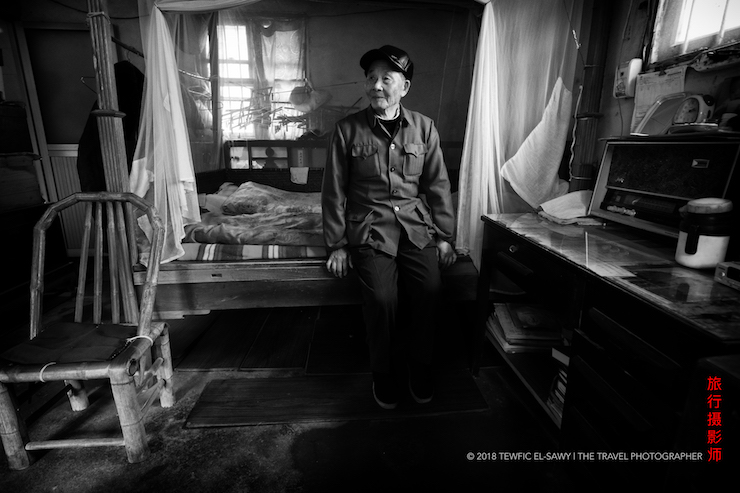
Photo � Tewfic El-Sawy | All Rights Reserved On an overcast day during my two weeks stay in Shanghai, I traveled to the ancient water town of Jinxi with a Chinese photographer, his wife and a translator. The town is about an hour's drive, and is known for being -as yet- untarnished by commercialism. Jinxi is also known as Chenmu, or the tomb of Chen. She was a beautiful royal concubine of Emperor Xiaozong(1127-1194)of the Song Dynasty. The legend is that during their stay in Jinxi, she decided to stay a little longer, and died there because of a sudden illness. However, this is not about Jinxi, but about a small nondescript small town a few miles away called Shi Hu Dang, where I was introduced to a delightful octogenarian by Mei Qi; a businesswoman and his student at the school where he had worked for decades.  I was welcomed by Mr. Wu into his small house; neat but cluttered at the same time. Unfortunately, his wife was absent doing errands so I could not meet her, alth...

Isabel Corthier | Believers : Myanmar

Image
Photo �  Isabel Corthier | All Rights Reserved It's not often that I stumble over a truly wonderful photographic website, and when it happens, I pore over its images very carefully...as long as it takes and relish the opportunity to share it on this blog. The work of Isabel Corthier is worth poring over; especially that one its themes "Believers" happens to be one that has attracted me for quite a while during my own photographic journey. For "Believers", Ms Corthier focuses her lens on Ecuador, Ethiopia, Uganda, Nepal and Myanmar . In the latter, her protagonist is a Buddhist nun called Ayethikar, who at 21 years was sent to the Agayar Tawya nunnery in Yangon because she was sickly. A few years later, she contracted Hepatitis C after being treated for dental issues. However, Ayethikar accepts her disease with Buddhist acceptance and equanimity. The nunnery houses 30 nuns; one of which is 7 years old. The nuns arise from sleep at 4:00 am to start their meditat...

An Rong Xu | New Romantics: China

Image
Photo �  An Rong Xu | All Rights Reserved Having just returned from Shanghai where I was giving a photo talk on travel photography following a street photography walk-about workshop, I was struck by the depth and breadth of talent found in young emerging Chinese photographers, who are passionate about their craft and eager to break boundaries. They are like "sponges" for ideas; new and old...and are quick learners when they need to be. Working on some of my personal projects took me to a couple of old water towns near Shanghai, such as Qi Bao (commercialized), Jinxi (untouched) and Xinchang (preserved), along with Shanghainese photographers.  The above photograph by An Rong Xu is of such a water town, and exemplifies the scenery that most of these relics have and provide to its visitors...whether local or foreign. It's part of his portfolio listed as New Romantics: China   in which he provides us with his view of his native country. He chose the title New Romantics to ex...

Travel Photographer Society Awards 2018 Announced

Image
Photo � Raed Ammari - Courtesy Travel Photographer Society - All Rights Reserved The TPS Photo Awards 2018 were recently announced by its founder,  Ahsan Qureshi, and the overall winning image is a macro photograph (above) by Raed Ammari. The winning submissions for all the categories were exceedingly difficult to judge due to their quality, as well as for their stylistic diversity.  In 2018, there were participants from 92 countries with 2560 entries.   I was one of the 15 judges; chosen amongst well established photographers in different fields of specialization. This attribute led to there being no ties in any single category; an unusual result for any imaging competition. It was a singularly tough competition to judge; not only for the sheer number and quality of the submissions, but also because of the number of categories: Street, People, Landscape, Wildlife, Black & White, Architecture, Sports, Fashion, Weddings and Stories. My favorite category ...

Beyond The Frame | "Lust Caution" | Fuji GFX50s

Image
Photo � Tewfic El-Sawy | All Rights Reserved It's been a hyperkinetic two weeks in Shanghai! I had a two hour (it ended by being twice as long) photo talk scheduled at the Imaging Group 's IG Photography Art Gallery, a large building that includes IG Studio and the very impressive Shanghai Museum of Antique Cameras, a large darkroom for analog enthusiasts, and even a photo-themed cafe adjacent to a large conference room. It was in the latter two spaces that the photo talk was held, where over 85-90 people were in attendance.  A day later, I led a photo-walk (street photography) near Fangbang Road amongst the narrow alleys which teem with residents...it was a black & white photography workshop, and was followed by critique of the 10 photographers' work during the walk-about. This too was held in the conference room space, and was attended (to my surprise) by around 30 photographers. However, I digress...Through the WeChat app (no one planning to visit China should...

The Passion For Travel Photography | Shanghai

Image
Well, my Shanghai Photo Talk is prepared and ready to go. It will include 137 photo slides, which will be accompanied by 25 pages of talking points and explanations. I timed the photo talk to take about 98 minutes excluding the live translation. Hence my absence from updating my blog for over a week. I suspect I will be unable to connect to the blog when I'm in Shanghai from March 26 to April 10. It will be held on March 31, a few days after my arrival in Shanghai. It is to be hosted by the Imaging Group 's IG Photography Art Gallery, a large building that includes IG Studio and the Shanghai Museum of Antique Cameras, founded by Mr Chen Haiwen ; a master photographer as well as a the recipient of the highest photography award in China twice in a row and Vice Chairman of the Shanghai Photography Association.