Posts

Showing posts with the label Multimedia

Jaranan In Java | Jay Tindall
Image
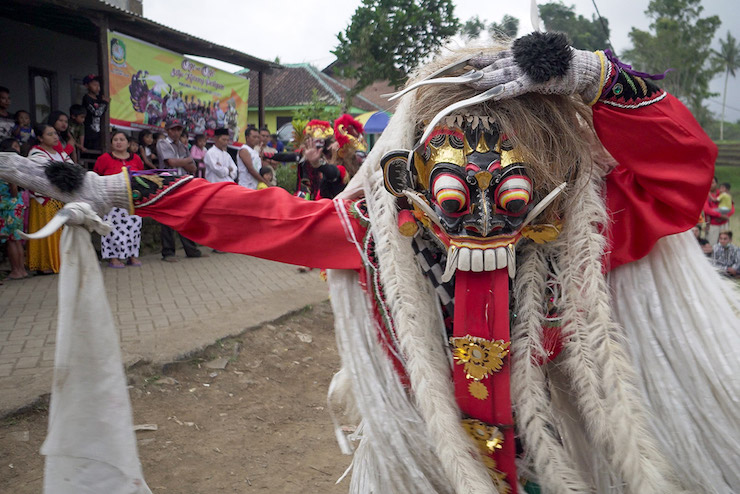
Photo � Jay Tindall- All Rights Reserved I've always been interested in documenting the unusual or lesser known religious traditions (especially those of Asia) whether these were derived from mainstream religions or were stand-alone. It was this interest that guided me to photograph a number of such traditions, including Vietnam's �?o M?u which I documented for two years and produced a photo book of which I'm very proud of. It's with this frame of mind that I discovered the tradition of Jaranan; an age old Javanese tradition though the photo blog post  Exorcism In The Volcano's Shadow by photographer/entrepreneur Jay Tindall. His blog post describes this tradition as "...an intense ritual of spiritual passion and trance-induced savagery", so I won't duplicate the interesting contents of his post, except to say that Jaranan is a dramatic genre of a horse dance performed in Java. The most prominent feature of these performances is the trance dancers who...
The Legend of Hua | Multimedia

I have now completed producing 'The Legend of Hua', an audio slideshow (aka photo film) which recounts in just over 3:30 seconds (reportedly today's upper limit for our attention span) the story of Hua. The story   meshes the topic of ghosts, opium, Shanghai in its 1930's heyday, traditional Chinese cultural and supernatural elements; all revolving around a plot of betrayal. The plot is influenced by a 1988 movie by Stanley Kwan (in turn based on a novel by Li Pi-Hua (also known as Lillian Lee), one of the most influential Chinese TV writers, film writers and reporters. I've recently produced a handful of audio slideshows that involve imaginary plots during the 1930s in Shanghai, featuring friends who take on the roles of wronged women...possibly wronged by either Chinese men or laowais/gweilos .  My long-time readers know that I've embarked on a  chinoiserie "phase" for quite a while now; a phase fueled  by my travels over the past few years to Hanoi...

The Girl of Nanjing Road : Part II

Image
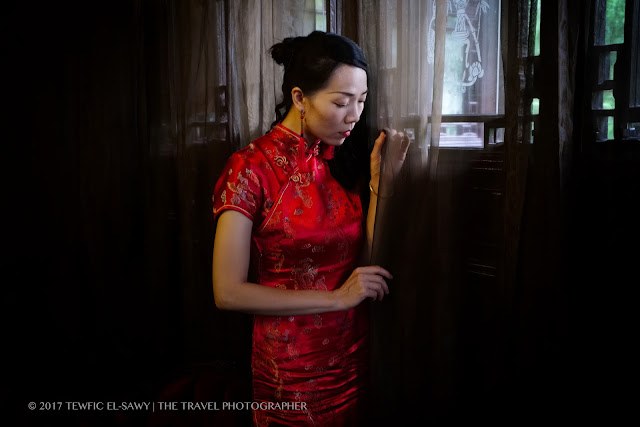
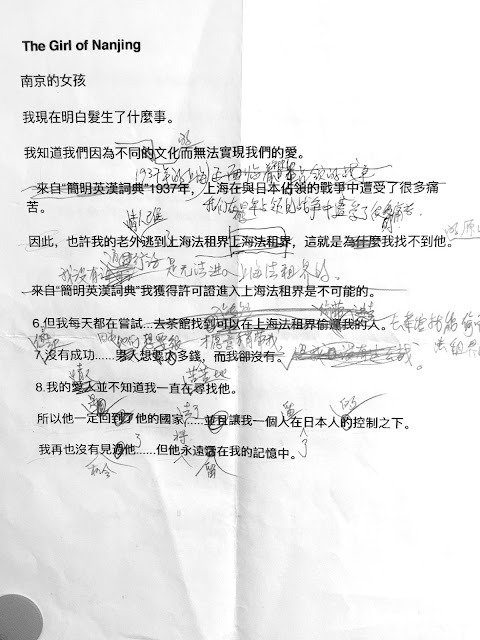
N anjing Road by Tewfic El-Sawy on Exposure I completed another personal project whilst in Shanghai a couple of weeks ago. It's a sequel to The Girl of Nanjing Road (Part 1) which featured Yi Yi as the main (and only visible protagonist). Both involve Yi Yi as a girl from Shanghai who's in a relationship with a foreign resident of that city during its glorious heydays of the 1930s, and into the start of the battle of Shanghai in 1937. For historical buffs; the Battle of Shanghai was the first of the twenty-two major engagements fought between the National Revolutionary Army of the Republic of China (ROC) and the Imperial Japanese Army during the Second Sino-Japanese War. During the fierce three-month battle, Chinese and Japanese troops fought in downtown Shanghai. In the end, the city fell, and China lost a significant portion of its best troops, while also failing to elicit any international intervention. Against this warring background, the Shanghai French Concession was a...

Nick McGrath | Chinese Opera Bangkok

Image
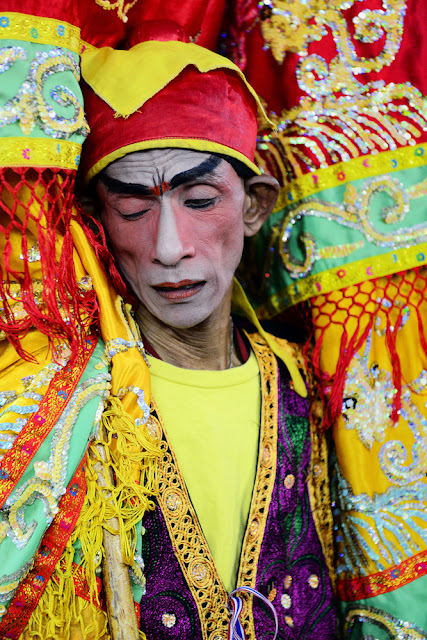
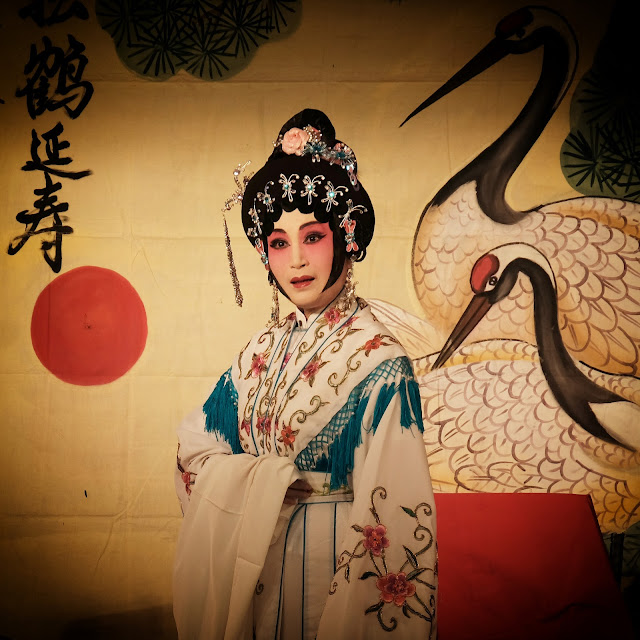
Photo � Nick McGrath | All Rights Reserved As followers of this blog may know, I've been deeply interested in Chinese Opera for a while, and I'm in the midst of a long term work-in-progress project to publish a photo book on the Chinese Opera in the Diaspora. So it was with great pleasure and interest that I discovered the work of photographer Nick McGrath in his lovely gallery Chinese Opera Bangkok , and from which I chose the above image of a performer's compelling portrait to accompany this post. Bangkok�s Chinese opera has long been a vibrant staple of Bangkok's Chinatown life. The Teochew Chinese, who immigrated to Thailand a couple of centuries ago, brought it with them as part of their cultural traditions, and to this day, during the Chinese festivals, there are regular performances at venues along Yaowarat Road. In common with others regions that have received the influx of a Chinese diaspora, the art form is in decline. Partly caused by a younger generation who...

iPhones For The Dead | MAEKAN

Image
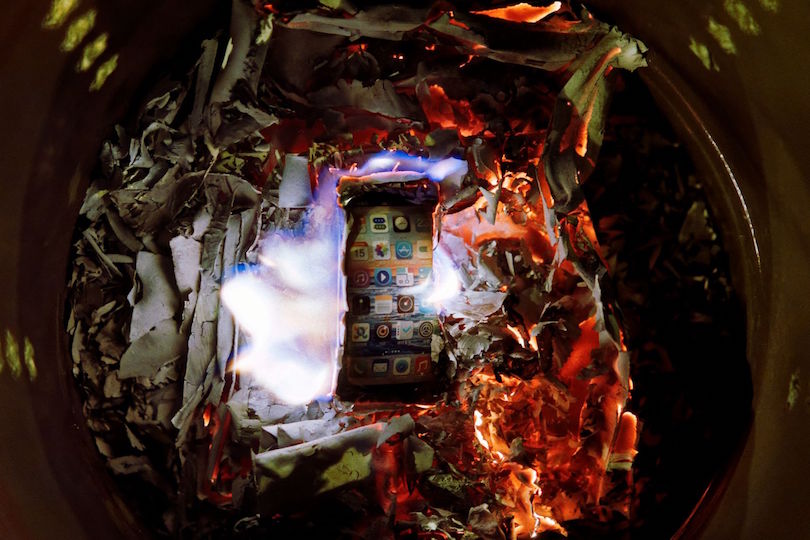
Photo � Mia Haggi | Courtesy MAEKAN Through NEOCHA, I stumbled on an interesting  Hong Kong based  media entity called MAEKAN , which describes itself as a platform for " original storytelling in its purest through captivating audio, engaging words and beautiful visuals " and an " audio-first publication exploring unexpected connections in culture ". A few months ago, I was in Kuala Lumpur photographing various temple ceremonies celebrating the Nine Emperor Gods festival, and being a strong advocate in merging still photography with ambient audio, I consequently was interested in MAEKAN's iPhones For The Dead story. (Don't miss the audio link to the narrated story).  In a Taoist temple in Kuala Lumpur, I recall walking in a warehouse full of paper replicas of money, miniatures of cars and appliances and other luxury items which were destined to be burned as offerings in the memory of Chinese ancestors. Photo � Tewfic El-Sawy | All Rights Reserved One of Chi...

C. Glendening & S. Leahovcenko | Mongolian Eagle Hunters

Image
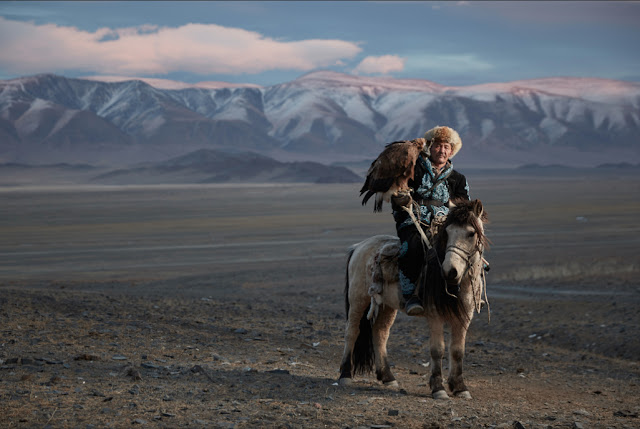
This is a double feature on the eagle hunters of the Altai mountains of Mongolia; one is the cinematic work of Cale Glendening, and the other is a photographic essay by Sasha Leahovcenco. The golden eagles live in the high Altai mountains, in far-western Mongolia, and build their nests in the crags of the area�s rugged peaks. The hunters, a Khazak minority, are traditional nomadic clans who learn to climb up to these crevices to capture and domesticate the young eagles. The birds are hand fed, and live with the hunters� families for years. The hunters take their eagles high into the mountains, so they can fly down and catch foxes and other small mammals. It's a dying tradition, with an estimated number of only fifty or sixty authentic eagle hunters left. Photo � Sasha Leahovcenco  | All Rights Reserved Although eagles can live for thirty years, the hunters keep each one for only about ten years, then release it to live out its last years in the wild. The hunters are called bu...

Omo Valley's 'Circus'

I was in Ethiopia's Omo Valley in 2004, and photographed many of the tribes in that area such as the Hamer, Mursi, and the Bume....in their villages and at their markets. At that time, the local guides negotiated with the tribes and their village leaders a modest monetary compensation so we could photograph them in their environment as they went about their daily lives. However, I was already sensing that this would soon explode into a veritable industry, which would progressively evolve into a 'circus' of sorts, altering the authenticity of the tribes' lifestyle, traditions and relationship with the tourists and photographers. I was right. Over the course of the intervening 10-12 years I viewed that very circus through images made by travel photographers who had gone to the Omo Valley. These images proved how the tribes authentic adornments had morphed into becoming accessories for fashion shoots that would satisfy the most inventive fashionistas.  Since early morni...

The Girl of Nanjing Road

Image
I'm not exactly sure where my interest in Shanghai erupted, but I do know that my  c hinoiserie "phase" has been bubbling for quite a while. Although it was influenced by my travels over the past two years to Hanoi and Kuala Lumpur, it was triggered by a couple of visits to the Malaysian capital's Old China Cafe; an atmospheric eatery in its Chinatown's vicinity. It was at this Old China Cafe; an old caf�-restaurant that serves a combination of Straits Chinese and Malay dishes, and whose untouched pre-war ambiance and large traditional feng shui mirrors gave me the idea of constructing a fantasy story about a beautiful Chinese woman dressed in a clinging red  qi pao  (or  cheongsam)  appearing   to an opium-addled Western photographer. Another another influence is In the Mood for Love , the 2000 Hong Kong film directed by Wong Kar-wai, starring Maggie Cheung and Tony Leung. It's moody theme is especially inspiring.  Fast forward to earlier ...

Cheryl Hoffman | The Flow And The Fire

As readers of this blog know, I've spent roughly two weeks in Kuala Lumpur to photograph the Taoist Nine Emperor Gods Festival with particular interest in its concomitant Chinese Opera performances. The latter are presented primarily to entertain the gods and spirits, and secondarily for humans.  I was privileged to be introduced to, and then guided through, the ritual labyrinths of the nine days long festival by Cheryl Hoffman who is not only a long time resident of Kuala Lumpur and a formidable photographer, but is also an " �minence grise " in all matters related to the religious and cultural DNA of Malaysia.  Although Cheryl's website provides fascinating galleries of her photographs made during various festivals (including an "almost" official guide to the Nine Emperor Gods festival), I thought I'd feature her most recent audio slideshow The Flow And The Fire which she describes as  "...on the eve of the Nine Emperor Gods Festival, space is t...

Cantonese Opera | Audio Slideshow

Cantonese Opera by Tewfic El-Sawy on Exposure My taking a few weeks of hiatus from posting was due to long distance travel to Hong Kong and Shanghai which consumed much of my free time, my getting busy with a couple of longer term photographic projects (such as Cantonese Opera, as per above audio slideshow), and being in need to recharge my batteries, and to regroup my long term plans for the type of photography I do. Although I have a number of posts impatiently waiting to appear on this blog, they'll have to wait a while longer until I return from Kuala Lumpur at the end of October, and where I'll be attending and photographing the Ninth Emperor Gods Festival .  The festival is a nine-day Taoist celebration beginning on the eve of 9th lunar month of the Chinese calendar, and it coincides with October 19 this year. My interest in this festival is two-fold: the primary reason is that it involves mediums and trances, and these may have a connection to my earlier wo...

Beneath The Makeup | Abel Blanco

Image
Here is a short documentary -part of the series Portrait of a Beijinger - produced by Abel Blanco, featuring a self-taught Peking opera performer who specializes as a nandan , or man who performs female roles on stage.  The nandan , as the cross-gender role in Chinese Opera is one of the most interesting and most challenging. It has a long history and tradition dating to feudal China more than 1,000 years ago when women were not allowed to perform onstage, so male actors had to fill the female roles in Chinese operas. This was popularized with Farewell My Concubine, the 1993 Chinese drama movie. The roles became well-known in Peking Opera after the emergence of the Famous Four Nandans in the early 20th century. They included Mei Lanfang (1884-1961), whose youngest son Mei Baojiu, also a famous nandan, died recently. Through song, speech, stylized movement, makeup, and costume, the nandan artists transform themselves into maidens, dowagers, prostitutes, and women warriors. To ...

Thrones of Semana Santa | Brandon Li

This is one of the best video-documentaries I've seen so far of a religious event/festival. Holy Week (Semana Santa) in Spain is the annual tribute of the Passion of Jesus Christ celebrated by Catholic religious brotherhoods and fraternities that perform penance processions on the streets of almost every Spanish city and town during the last week of Lent, the week immediately before Easter. This annual tribute has been observed for the past 500 years. The start of the documentary and its soundtrack reminded me of the blockbuster movies franchise; Da Vinci Code, Angels and Demons and Inferno. The documentary clocked over 25,000 views on Vimeo, gained its Staff Pick and deservedly so. Brandon Li describes himself as a nomadic filmmaker on an endless world tour to document various cultures. For those interested, his film-making kit is here . 

The Red Qi Pao | The Back Story...

Image
Readers of this blog will know that I've been interested in adding another arrow to my quiver  -photographically speaking-  for quite a while, and I'm now earnestly starting a "chinoiserie" phase  in my photographic trajectory.  As I wrote in an earlier post , " ..it is not really about fashion and/or attractive models (although it's obviously nice to include them), but about a theme. The theme of "Shanghai-1940" is one that I seek to recreate through still photography and audio, and weave a narrative into stories...akin to short movies. " Whilst in Kuala Lumpur in 2016 participating in the annual Travel Photographer Society event,  I was introduced to The Old China Cafe; an old caf�-restaurant that serves a combination of Straits Chinese and Malay dishes, and whose untouched pre-war ambiance and large traditional feng shui mirrors gave me the idea of constructing a fantasy story about a beautiful Chinese woman dressed in a clinging red qi pa...

Thaipusam Festival In Singapore | Hendra Lauw

Image
Here's an interesting and compelling slideshow on Thaipusam, the Hindu festival celebrated mostly by the Tamil community during January or February. It's mainly observed in countries where there is a significant presence of Tamil community such as India, Sri Lanka, Malaysia, Mauritius Singapore, Indonesia, Thailand and Myanmar. Thaipusam is a celebration dedicated to the Hindu deity Lord Murugan (youngest son of Shiva and his wife Parvati).  This particular slideshow was made of a combination of color and monochrome photographs. Thaipusam is a rather striking festival with devotees shaving their heads and undertaking a pilgrimage along a set route while carrying out various acts of devotion, which may include self-mortification by piercing the skin, tongue or cheeks with skewers. For my taste, the slideshow relies too heavily on the Ken Burns effect; presumably thought by the photographer to add focus to the scenes, but I thought was distracting. Nonetheless, the slideshow made...

NEOCHA | The Puppets of Myanmar

Image
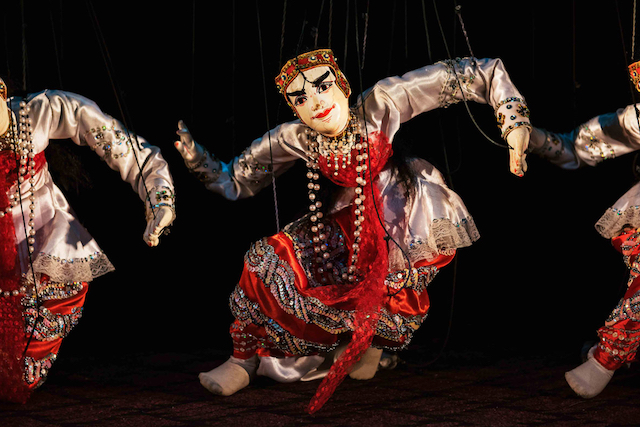
Photo � Chan Qu | Courtesy NEOCHA  The string puppets of Myanmar (previously known as Burma) are called Yoke Th� ( meaning "miniatures"). It originated from royal patronage and were gradually adapted for the wider populace. The puppets or marionettes are intricately made, and require considerable dexterity as they are "controlled" by 18 or 19 wires for male and female characters respectively, especially as each puppet can only be controlled by only one puppeteer. It is thought that Burmese marionettes originated around 1780 and were introduced to the courts of the time by a Minister of Royal Entertainment, U Thaw. Little has changed since the creation of the art, and puppet characters are still used today. However, the art went into decline during the colonization of Upper Burma by the British in November 1885 following the Third Anglo-Burmese War. It is said that because the puppets were mere wooden dolls, their �speech�, although voiced by humans, was allowed more...

Souvid Datta | India's Fading Musical Tribes

Image
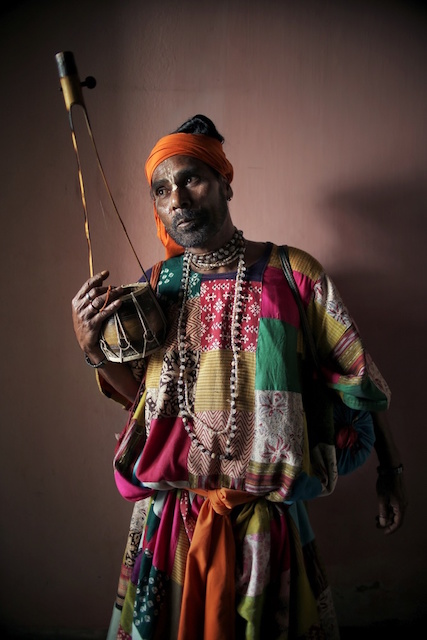
Photo � Souvid Datta - All Rights Reserved One easily falls head over heels for India. No question about it. It happened to me in 1998, and I've traveled to its four corners (with some exceptions) over 20 times, imbibing its people, sights, smells, cultures, music and everything in between. It's well known for its diversity, various physiognomies, languages, religions, traditions and cultures. Across the country�s 29 states, over 500 dialects are spoken, over 800 million reside in booming metropolises, and its rural enclaves are home to over 2000 tribes. However modernity and globalization exact a price on all nations; especially those with traditions and cultures as deep as those of India. And may well cause the disappearance of its tribes, cultural practices and musicians. For example, the dancing Veerghase troops of Karnataka, the formidable hunting tribes of Nagaland, the revered Kawaili singers of Rajasthan: these groups, once essential and symbolic of their regions, may n...

Berta Tilmantaite | Burma - Myanmar

Image
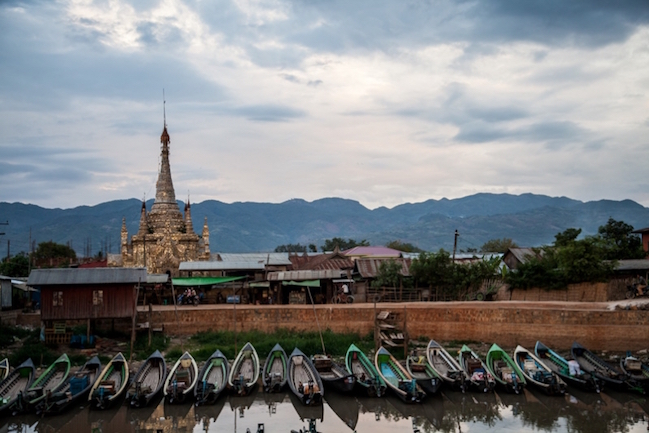
Photo � Berta Tilmantaite -All Rights Reserved I am saddened by the recent news of a major earthquake affecting Myanmar, and at the loss of life and at the reported damage to over 150 historic pagodas in Bagan...so I was glad to have noticed the work of  Berta Tilmantaite on my Facebook timeline-wall. It's not as much on Bagan and its pagodas, but is a visual and musical journey through Myanmar, specifically while Berta and a friend were traveling on a public boat from Yangon to Pathein, and onwards to Bagan. They stayed on the deck with all other people - locals, traveling to small villages along the river. I recall taking this public boat at dawn from Mandalay to Bagan, and it was a wonderful trip. Berta Tilmantait� is a Lithuanian multimedia journalist, photographer and videographer. Her visual stories from different parts of the world often focus on the connection between human and nature. Berta has BA in Journalism from Vilnius University (Lithuania), also took a cours...

H?u B�ng | The Cult of The Immoral

Image
I found this fascinating short movie on my Facebook timeline. The many readers of my blog know of the recent publication of my book H?u �?ng: The Spirit Mediums of Viet Nam (on Amazon ), and this short movie which was filmed in 1934 not only fits perfectly fits in the book's narrative, but also provides me with an incomparable view of the past, and how the ceremonies I documented were conducted over 80 years ago. If the movie doesn't play, click here  to watch it on YouTube. Let me start by the title of the movie: in French it reads the cult of the immoral. French colonialism in Vietnam lasted more than six decades, and by the late 1880s it controlled Vietnam, Laos and Cambodia, which it referred to as Indochine Francais. It became one of France�s most lucrative colonial possessions. The French justified their imperialism as being a �civilising mission�, a pledge to develop backward nations. Consequently, most indigenous traditions were considered as barbaric, especially thos...

Shiho Fukada | The Samurai of Fukushima

Image
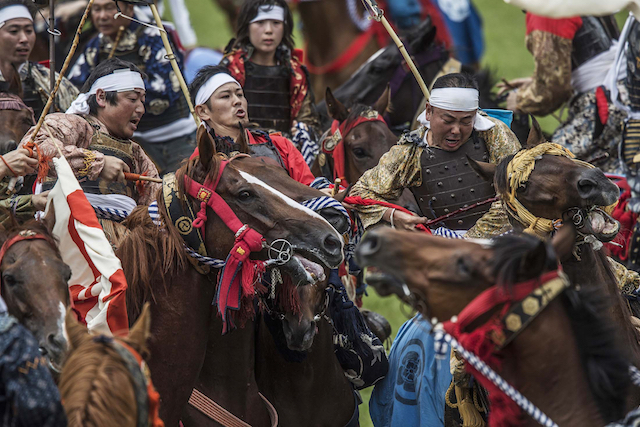
Photo � Shiho Fukada - Courtesy Bloomberg Here's another photo essay on the Soma-Nomaoi festival by photojournalist Shiho Fukada as featured by Bloomberg Pursuits. The annual festival involves horse-riding participants don elaborate armor like samurais, who aim to recreate scenes from Japan's Sengoku period (1467�1603) which was marked by social upheaval, political intrigue and near-constant military conflict. The festival's original purpose was a military exercise designed to sharpen the fighting skills of the samurai. One event in the festival, Shinki Sodatsusen, sees the samurai compete for flags that have been shot into the air. The festival has been designated as an "intangible cultural asset" by the Japanese government. Shiho Fukada is an Emmy-nominated filmmaker, cinematographer, and photojournalist based in Boston and Tokyo. She started her career as a news photographer in New York and has a decade of experience shooting and producing stories nationall...