Posts

Showing posts with the label Beyond The Frame

Beyond The Frame | Yan Yang Tian Troupe | GFX 50s
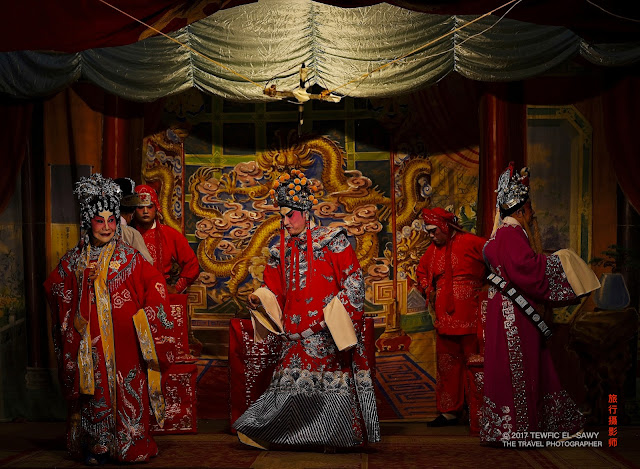
Image
Photo � Tewfic El-Sawy | All Rights Reserved Although the Fuji GFX50s might not really be the most appropriate format to photograph theatre and opera, it produced interesting images while using it to photograph a live performance by the Yan Yang Tian opera troupe in at the    Leng Eng Tian Khiew Ong Tai Tay temple  in Kuala Lumpur during the annual Taoist Nine Emperor Gods Festival.  For nine days, Taoists gather at various temples around the country to celebrate the Nine Emperor Gods festival, which begins on the eve of the ninth month of the lunar calendar. The troupe performs traditional Cantonese opera, and has been on stage since its founder opera troupe owner Elizabeth Choy was 7 years old. Now in her late eighties, she is considered a treasure by the Chinese-Malay communities in Malaysia as well as those in neighboring countries. While the popularity of Cantonese opera has dwindled, especially among the young, her troupe has continued to perform in local ...
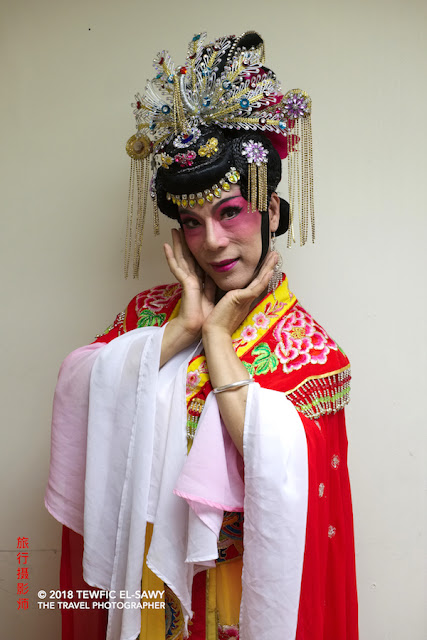
Beyond The Frame | Qu Hui | X-Pro2

Image
Photo � Tewfic El-Sawy | All Rights Reserved I was officially recognized as the photographer for The Shade of Butterfly & The Red Pear Blossom opera at the community center theater in NYC's Chinatown. It was the first opera of the season, and is one of the most famous Cantonese operas, and described as a masterpiece. The plot centers on a scholar Yu-chow and the courtesan So-chow who write poems to each other and fall in love despite having never met. The scholar is attached to the court of a treacherous high official who schemes to keep the lovers at bay. The two lovers meet in the final act much to the delight of the audience. I was introduced to Mr. Qu Hui, a mainland Chinese performer, who was to perform one of the lead roles in the opera, and also to sing a few more modern songs. A charismatic tall man, seemingly very comfortable in high heels, he posed for my camera for a few minutes before the show. Cross-dressing has been an integral part of Chinese Opera from its ...

Beyond The Frame | Hua | GFX50s

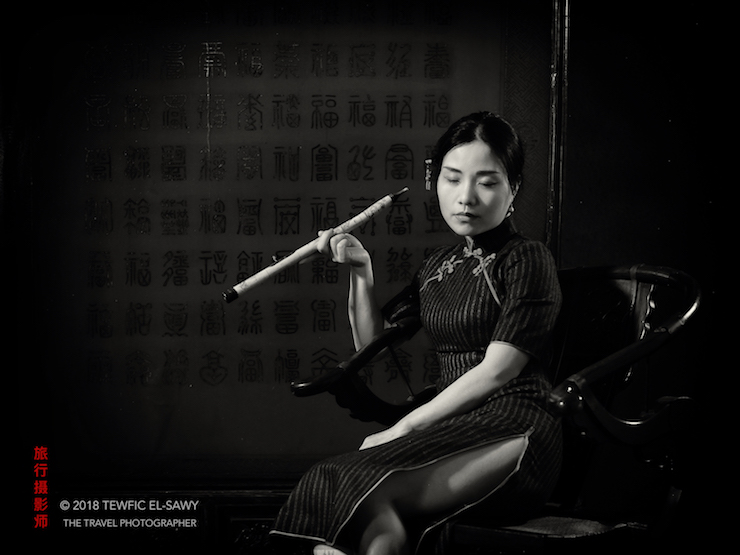
I've been absent from this blog for a while due to 'busy-ness', and working on a new audio-slideshow (aka photo-film) titled "The Legend of Hua"...which turned out to be more time-consuming than I anticipated, due to the various audio tracks that had to mesh with still photographs. In the meantime, I uploaded a sample of the still images from the soon-to-be released audio slideshow unto my Exposure website, however I chose to post process these differently from those in the slideshow.  I had read that a photographic technique merging silver printing with charcoal painting was widely popular in the 1920-1930s Shanghai, so I explored various modern digital post processing ways to try and imitate that 'look' as closely as I knew how. After a number of failed attempts, I chose a process which mixes a combination of my own settings using two imaging softwares; ON1 Photo Raw 2018 and Iridient Developer 4. When I was satisfied with the resultant 'look', I...

Beyond The Frame | Ren Li Fung | Fuji GFX50s

Image
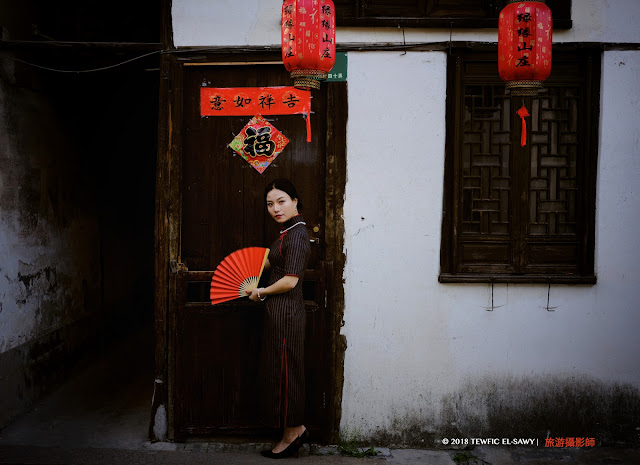
Photo � Tewfic El-Sawy | All Rights Reserved I'm currently working on a rather intricate "photo film" or audio slideshow that will mesh the topic of ghosts, opium, Shanghai in its 1930's heyday,  traditional Chinese cultural and supernatural elements; all revolving around  a plot of betrayal. The plot itself is influenced by a 1988 movie by Stanley Kwan (in turn based on a novel by  Li Pi-Hua (also known as Lillian Lee), one of the most influential Chinese TV writers, film writers and reporters.  It's funny how one thing leads to another...while planning my fortnight in Shanghai and preparing for my lecture and street photography workshop some six or seven weeks ago, I was invited to a number of WeChat groups by Yi Yi; a previous acquaintance from that super-modern city who would work with me on the second iteration of The Girl of Nanjing Road .  Through these WeChat groups, I connected with Ren Li Fung ("Betty") who seemed very popular as a qi pao mode...

Beyond The Frame | Mr. Wu of Shi Hu Dang | Fuji X-Pro 2

Image
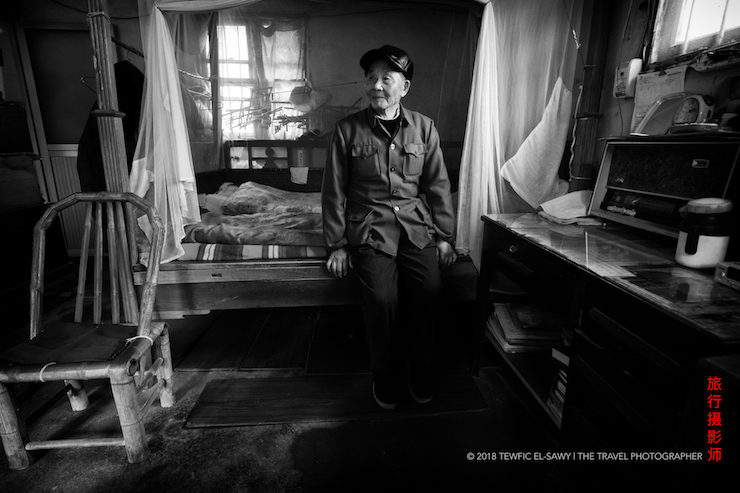
Photo � Tewfic El-Sawy | All Rights Reserved On an overcast day during my two weeks stay in Shanghai, I traveled to the ancient water town of Jinxi with a Chinese photographer, his wife and a translator. The town is about an hour's drive, and is known for being -as yet- untarnished by commercialism. Jinxi is also known as Chenmu, or the tomb of Chen. She was a beautiful royal concubine of Emperor Xiaozong(1127-1194)of the Song Dynasty. The legend is that during their stay in Jinxi, she decided to stay a little longer, and died there because of a sudden illness. However, this is not about Jinxi, but about a small nondescript small town a few miles away called Shi Hu Dang, where I was introduced to a delightful octogenarian by Mei Qi; a businesswoman and his student at the school where he had worked for decades.  I was welcomed by Mr. Wu into his small house; neat but cluttered at the same time. Unfortunately, his wife was absent doing errands so I could not meet her, alth...

Beyond The Frame | "Lust Caution" | Fuji GFX50s

Image
Photo � Tewfic El-Sawy | All Rights Reserved It's been a hyperkinetic two weeks in Shanghai! I had a two hour (it ended by being twice as long) photo talk scheduled at the Imaging Group 's IG Photography Art Gallery, a large building that includes IG Studio and the very impressive Shanghai Museum of Antique Cameras, a large darkroom for analog enthusiasts, and even a photo-themed cafe adjacent to a large conference room. It was in the latter two spaces that the photo talk was held, where over 85-90 people were in attendance.  A day later, I led a photo-walk (street photography) near Fangbang Road amongst the narrow alleys which teem with residents...it was a black & white photography workshop, and was followed by critique of the 10 photographers' work during the walk-about. This too was held in the conference room space, and was attended (to my surprise) by around 30 photographers. However, I digress...Through the WeChat app (no one planning to visit China should...

Beyond The Frame | The Black H'mong With Birdcage | 5D Mark II

Image
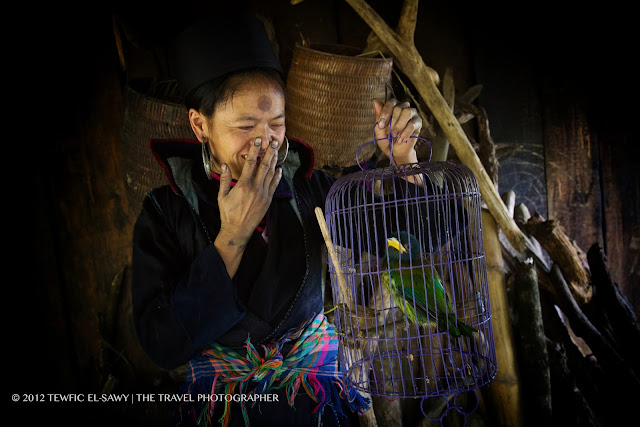
Photo � Tewfic El-Sawy | All Rights Reserved The H'mong, estimated at about 1 million people, constitute one of the largest ethnic group in Vietnam and one of its tribal group, known as the Black Hmong, are reputed for their handicraft and indigo blue clothes made of hemp. The women  wear long blouses over short trousers, and wrap long scarves around their legs. They wrap their long hair around their head covered by a turban. The H'mong came to Vietnam from South China some 300 years ago, during the Ming and Qing dynasties.  The majority live in northern Vietnam's Lao Cai province.  Their spoken language belongs to the H�mong�Dao language family, and although their writing was Romanized in 1961, it is not widely used. The back story on the top photograph: I was walking in a Black H'mong village (I don't recall  its name, but it was at a short drive from Sapa), and chanced upon a woman sweeping her porch. She was used to tourists, and didn't seem perturbed when I...

Beyond The Frame | The Ca Tr� Singer | Fuji X-T1

Image
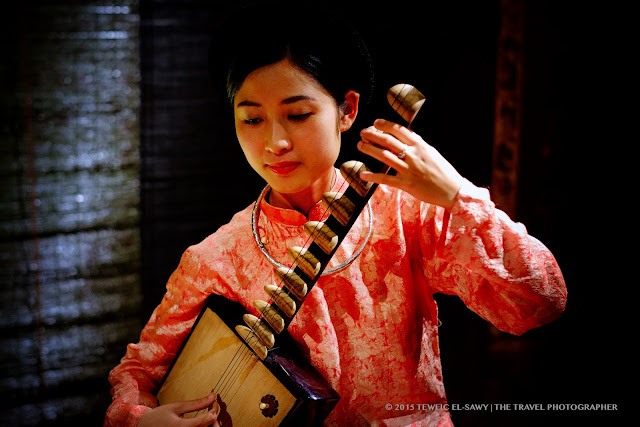
Photo � Tewfic El-Sawy | All Rights Reserved Ca Tr� (pronounced �ka tchoo�) is a complex form of sung poetry found in the north of Viet Nam using lyrics written in traditional Vietnamese poetic forms. It flourished in the 15th century when it was popular with the royal palace, and was a favorite activity of aristocrats and scholars. It was later performed in communal houses, inns and private homes. In 2009 Ca tr� singing was inscribed on UNESCO�s Intangible Cultural Heritage �Urgent Safeguarding List.� Its performances involve at least three people: a female singer ( d�o nuong ) who both sings and plays the clappers (known as the ph�ch) , an instrumentalist (k�p) who plays the d�n d�y (three-stringed lute), and a �praise drummer� known as quan vi�n who beats the tr?ng ch?u . Historically, when spectators (usually male) entered a Ca Tr� performance, they purchased bamboo tally cards. In Chinese, Tr� means card, while Ca means song in Vietnamese, and thus Ca Tr� means tally car...

Beyond The Frame | Khanqah of Shah Hamdan (Kashmir) | X-Pro1

Image
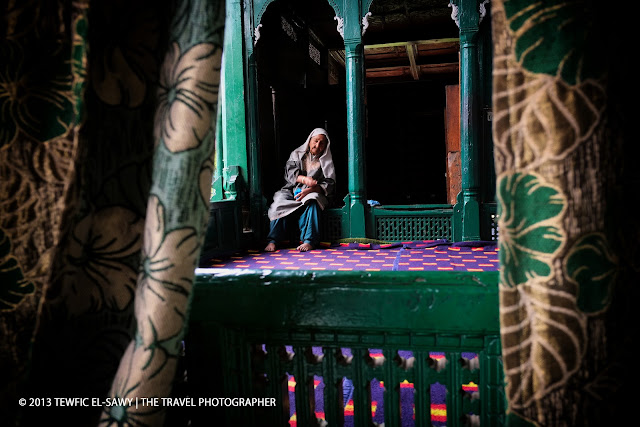
Photo � Tewfic El-Sawy | All Rights Reserved Amir Khusrow Dehlavi (1253 � 1325 )  was a Sufi musician, poet and scholar from the Indian subcontinent, who was quoted as saying of Kashmir: �If there is a heaven on earth, it's here, it's here. (� Gar firdaus bar-rue zamin ast, hami asto, hamin asto, hamin asto. �) It is also said that it was Emperor Jehangir who said these words...whoever said it (and my money is on Khusrow), Kashmir is indeed beautiful. I'll set aside political views on the current (and recent) political events in Kashmir, and dwell on its beauty and spirituality....and its photographic magnetism. Historians are united that Hazrat Bulbul Shah was the first saint who sowed the seeds of Islam in Kashmir in 1301, and he might have come from Samarkand or from Bukhara. It was he who convinced Rinchan, the then ruler of Kashmir to convert to Islam, and Sadruddin Shah (as he became known) was the first Muslim ruler of Kashmir. He ruled Kashmir from 1320 to 13...

Beyond The Frame | The Qi Bao Shuchang/Teahouse | Fuji X-Pro2

Image
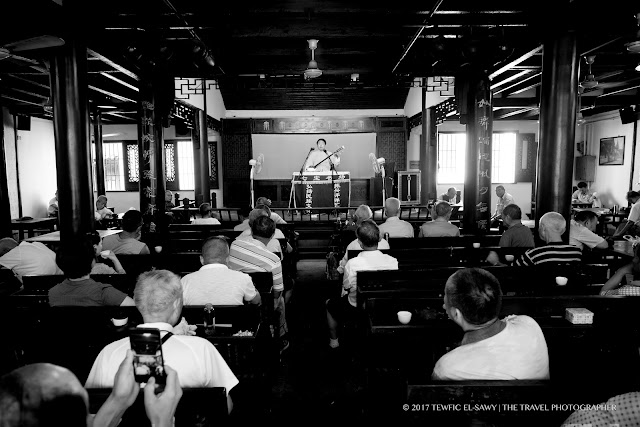
 A shuchang in Qi Bao. Photo � Tewfic El-Sawy | All Rights Reserved Six months ago the words Qi Bao (totally distinct from qi pao , which is also known as cheongsam ) and Shuchang would've been totally unfamiliar to me; yet during and after too short a trip to Shanghai this past September, they've become part of my vocabulary as I am planning my return to this exciting megalopolis at the end of next month. Shuchang is a traditional teahouse where storytelling called " shuohua" is performed.   Storytelling was one of the major forms of entertainment in the medieval cities of the Song period (906-1279), and contained both spoken and sung performances, and many of the themes told are still part of today's storytellers' repertoire.  It's in the old water-town of Qi Bao  (???) that I walked in such a teahouse, and experienced a  shuoshu storyteller performing his art of  talking, joking, singing and acting; all accompanied by his three-stringed lute (pipa or...

Beyond The Frame | The Getai Singer | Fuji GFX50s

Image
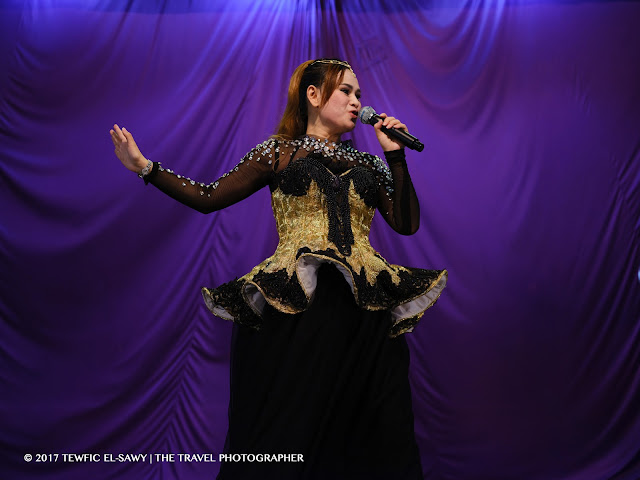
Photo � Tewfic El-Sawy | All Rights Reserved The Beyond The Frame posts on The Travel Photographer blog are currently its most popular feature, and I'm glad to have recently restarted it after a long (and inexplicable) hiatus. However, I intend its posts to not only be photographically  informative, but  also to include snippets of culture that may not be widely known, and which I frequently either intentionally seek or stumble upon on my photo journeys. While  wandering at the back of the stage  of a Hokkien (Chinese) opera troupe in Klang (near Kuala Lumpur) taking photographs of the performers applying their intricate makeup and putting on their costumes, I noticed a young woman in an unusually constructed dress, nervously pacing to and fro, rehearsing her lines which she read off a scrap of paper. She wasn't part of the troupe, so I engaged her in a conversation to find out how she fitted in the upcoming show. She informed me that she was the 'warm-up' show for t...

Beyond The Frame | Vietnamese Mourner | Canon 5D Mark II

Image
Photo � Tewfic El-Sawy | All Rights Reserved I was rummaging through my archives to pull photographs suitable for my forthcoming photo talk in Shanghai, and picked this one of a Vietnamese mourner at a roadside funeral. I thought it was be appropriate to feature in this Beyond The Frame post since it will soon be T?t (or T?t Nguy�n ��n as the Vietnamese Lunar New Year is called) during which families visit their ancestors� tombs and clean grave sites.  Unsurprisingly, the Chinese also have an identical tradition known as Qingming or Ching Ming Festival (Tomb-Sweeping Day) which is regularly observed as a statutory public holiday in China. In fact, the timing of my photo talk in Shanghai was brought forward to avoid the festival as many people would be traveling to cemeteries at that time.  This photograph was made at a roadside funeral while I (and other photographers on my  Vietnam: North of the 16th Parallel Photo Expedition/Workshop )  was returning...

Beyond The Frame | The Robot Restaurant Show Girl | Fuji X-Pro2

Image
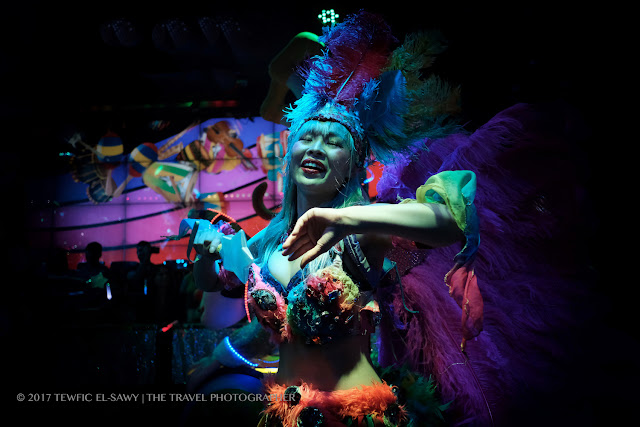
Photo � Tewfic El-Sawy | All Rights Reserved This Beyond The Frame post features one of the many images I made at the Robot Restaurant, located in Tokyo's Shinjuku nightlife district, and described by many as one of the wildest shows on Earth....which is quite true. Anthony Bourdain got the shock of his life here, and it has since become a magnet for foreign visitors (and locals) seeking to experience the same "buzz' he had. The Robot Restaurant is located not far from the Shinjuku Station, and is in the area best described as the underbelly of Tokyo's nightlife...which includes all sorts of seedy venues and other activities best left to the imagination. The 90-minute cabaret style shows include bikini clad futuristic dancers, performers dressed as robots and a host of oversized vehicular robots -- all in a laser-lit room. The dancers et al are highly trained and rehearse around the clock to perfect the complicated routines involving dancing to drumming, pole dancing a...

Beyond The Frame | The ��n Nh? Player | Fuji X-T1

Image
Photo � Tewfic El-Sawy | All Rights Reserved I thought I'd feature an audio file as well as  an image for this post of Beyond The Frame; both which were produced during my  The People of Tay Bac Photo Expedition-Workshop  in September 2014; a trip which planted the seed for my two years book project  H?u �?ng: The Spirit Mediums of Vietnam  (now on Amazon). Th? H� village is about 40 kilometers from Hanoi, and is reachable across the narrow Cau River which we crossed  on a rusty ferry. The village is known for making  rice paper and banh da (rice crackers); its two main exports since 1990. We passed a a row of old houses, and met Vi?t in one of the courtyards. He welcomed us into his house, offering us rice wine in small goblets. Seeing a collection of traditional instruments on his living room's walls, I asked if he played them...and he said yes. Being encouraged to play, he grabbed one of the stringed instruments and started singing a number of...

Beyond The Frame | Vietnam's Bac Ha | Leica M9

Image
Photo � Tewfic El-Sawy | All Rights Reserved One of my favorite photographs was made in the market town of Bac Ha of northern Vietnam, known as T�y B?c (literally "Northwest"). It consists of six provinces, which include the province of L�o Cai. Vietnam has 54 ethnic groups, giving it the richest and most complex ethnic makeup of Southeast Asia. The majority of the ethnic minorities live in the hilly regions of the Northwest. The region is home to the Hmong, Zao, Nung, San Chay, Cao Lan, Giay, and Lolo, as well as the Tay, and Muong. The photograph was made at the Sunday market in Bac Ha, which hosts around 10 of these ethnic tribes who come to sell or barter their produce and products. Bac Ha itself is a sleepy town that comes alive during the weekend, and when the bartering, buying and selling is done and the tourist buses from Sapa have left, it goes back to bed for the rest of the week. In common with markets all over the world, "pop-up" eateries spring to life ...