Posts

Showing posts with the label Fuji

Beyond The Frame | "Lust Caution" | Fuji GFX50s
Image
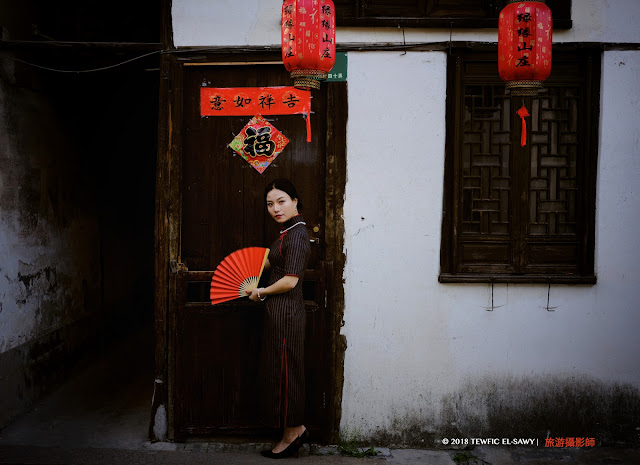
Photo � Tewfic El-Sawy | All Rights Reserved It's been a hyperkinetic two weeks in Shanghai! I had a two hour (it ended by being twice as long) photo talk scheduled at the Imaging Group 's IG Photography Art Gallery, a large building that includes IG Studio and the very impressive Shanghai Museum of Antique Cameras, a large darkroom for analog enthusiasts, and even a photo-themed cafe adjacent to a large conference room. It was in the latter two spaces that the photo talk was held, where over 85-90 people were in attendance.  A day later, I led a photo-walk (street photography) near Fangbang Road amongst the narrow alleys which teem with residents...it was a black & white photography workshop, and was followed by critique of the 10 photographers' work during the walk-about. This too was held in the conference room space, and was attended (to my surprise) by around 30 photographers. However, I digress...Through the WeChat app (no one planning to visit China should...
Beyond The Frame | The Ca Tr� Singer | Fuji X-T1

Image
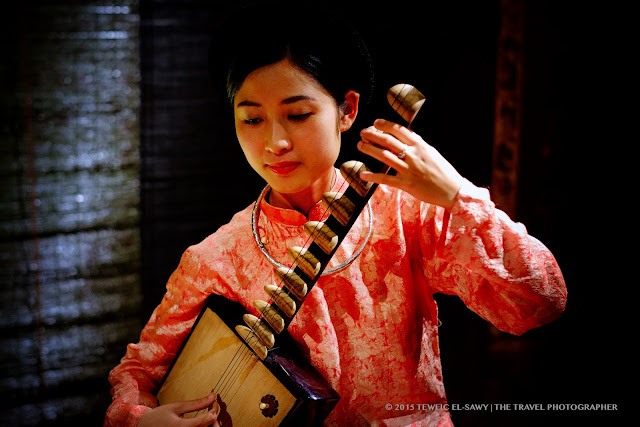
Photo � Tewfic El-Sawy | All Rights Reserved Ca Tr� (pronounced �ka tchoo�) is a complex form of sung poetry found in the north of Viet Nam using lyrics written in traditional Vietnamese poetic forms. It flourished in the 15th century when it was popular with the royal palace, and was a favorite activity of aristocrats and scholars. It was later performed in communal houses, inns and private homes. In 2009 Ca tr� singing was inscribed on UNESCO�s Intangible Cultural Heritage �Urgent Safeguarding List.� Its performances involve at least three people: a female singer ( d�o nuong ) who both sings and plays the clappers (known as the ph�ch) , an instrumentalist (k�p) who plays the d�n d�y (three-stringed lute), and a �praise drummer� known as quan vi�n who beats the tr?ng ch?u . Historically, when spectators (usually male) entered a Ca Tr� performance, they purchased bamboo tally cards. In Chinese, Tr� means card, while Ca means song in Vietnamese, and thus Ca Tr� means tally car...

Beyond The Frame | Kyoto's Fushimi Inari Shrine | GFX50s

Image
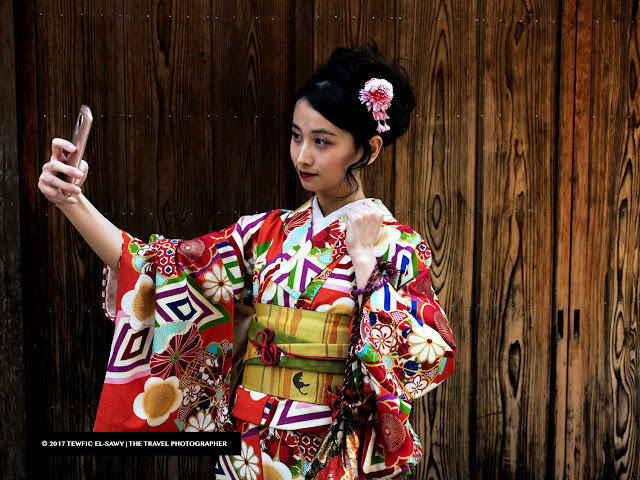
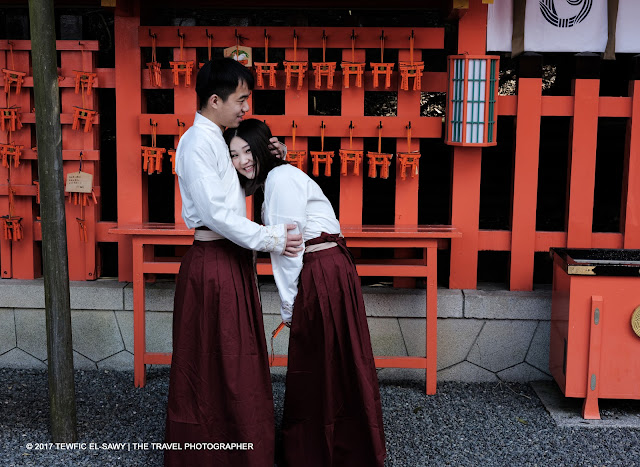
Photo � Tewfic El-Sawy | All Rights Reserved The Fushimi Inari Shrine (??????) is an important, and very popular, Shinto shrine in Kyoto. It is famous for its thousands of vermilion torii gates, which straddle a network of trails behind its main buildings. The trails lead into the wooded forest of the sacred Mount Inari. Naturally, the site is a magnet for tourists, who come here in large groups or individually, to walk its trails and to pose for either selfies or for pre-arranged photo shoots. Not far from the entrance to the shrine, I watched one of these photo shoots in progress, which involved a young couple wearing identical dress being photographed by a photographer and his assistant. They had a chosen a spot that had small replicas of  torii gates hung as souvenirs, and were clearly enjoying their pre-wedding event. I approached the group, and asked permission to photograph as well...and it was readily agreed to by all. It turned out that the couple was from China, while t...

The Hokkien Opera Actor | The GFX50s

Image
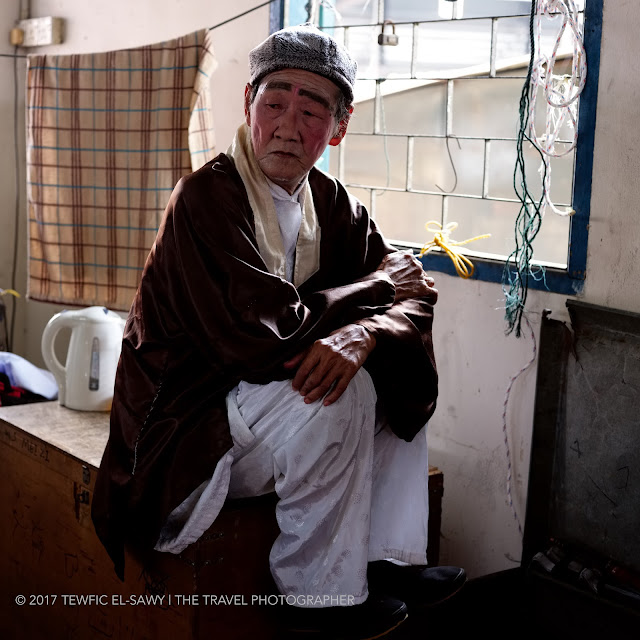
Photo � Tewfic El-Sawy | All Rights Reserved (GFX50s) At the end of every trip, whether I had been giving a workshop or working on a project, there's one (or perhaps two) frame(s) that I specifically fall in love with. This never fails to happen. I believe it's about developing an instant emotional bond for the subject(s) in such frames. As I often tell those who attend my workshops...the photographer has to fall in a semblance of "love" with his or her models. Whether posed or candid photo shoots, successful imagery depends on the mutual bonds that develops between these parties.  I was in Kuala Lumpur last month during the Nine Emperor Gods festival; an important Taoist religious festival which begins on the eve of 9th lunar month of the Chinese calendar.  While the festival itself with its unusual rituals and religious processions is a veritable feast for the eyes, for the senses and naturally for photography, I was there to photograph the performances and back s...

The Ca Tr� Musician | Fuji X-T1

In March 2015 I had just started researching and photographing the cult of Mother Goddesses in Hanoi, and was introduced once again to the ancient art of Ca Tr�. I had attended one of its performances already during one of my photo expeditions in 2012. The performances were held in a small, but very atmospheric, old Vietnamese house on Hanoi's Hang Buom Street. It is during these performances that I met Ms. �?ng Th? Hu?ng, a Ca Tr� singer and musician, who played the traditional Vietnamese three-stringed lute, amongst other instruments. She was keen to be photographed in a traditional Vietnamese dress at a different venue such, and we chose �?n Ng?c Son, the Temple of the Jade Mountain, on Lake Hoan Kiem. Ca Tr� (pronounced �ka tchoo�) is a complex form of sung poetry found in the north of Viet Nam using lyrics written in traditional Vietnamese poetic forms. It flourished in the 15th century when it was popular with the royal palace, and was a favorite activity of aristocrats and s...

The Travel Photographer's Chinoiserie Phase

Image
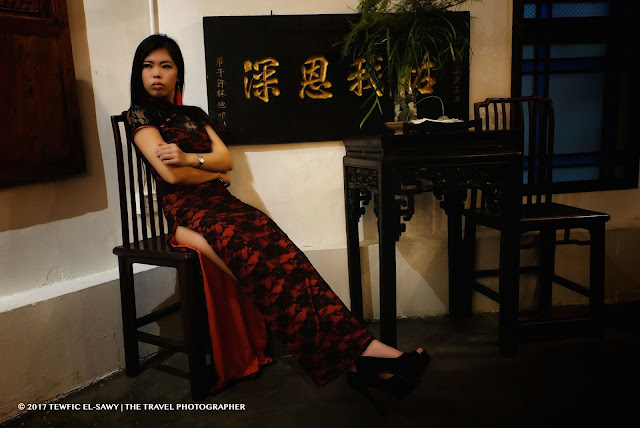
Photo � Tewfic El-Sawy - All Rights Reserved Chinoiserie (from ' chinois ' the French for Chinese) is a style inspired by art and design from China, Japan and other Asian countries. Fashion designers, furniture makers, wallpaper designers, artists and photographers have consistently been heavily influenced and inspired to produce work that reflect this aesthetic. My c hinoiserie "phase" has been bubbling for quite a while. Certainly influenced by my travels over the past two years to Hanoi, and annual visits to Kuala Lumpur, it was triggered by a couple of visits to The Old China Cafe; an atmospheric eatery in KL's Chinatown's vicinity, and which in turn resulted in a short  audio-slideshow bearing the same name. My immersive experience in the Vietnamese  H?u �?ng  rituals for my photo book was another push in this direction, especially with the fashion sense and the ethnic costumes of the mediums. Yet another influence of mine is In the Mood for Love (Chine...

Experimenting With The Fuji GFX50s

Image
Photo � Tewfic El-Sawy - All Rights Reserved I had been ruminating getting involved with medium format photography for quite some time. In fact, I had used the analog Mamiya 645 many years ago, but when I tried to have its defective shutter replaced a few months ago, I was told that the lack of readily-available parts would make it difficult, lengthy and potentially costly. Then I reflected on having to get involved in buying films, have them processed, scanned et al. So that impulse came to a halt. I've been using the X-Pro2 (and a panoply of prime and zoom Fuji lenses) as my primary go-to camera since mid-2016 and was (and still am) perfectly content with the quality of its images. I also used -to a lesser extent- two Fuji X-T1 cameras which came in handy when I needed them for certain situations. So my gear needs were more than satisfied in terms of image quality and job requirements. Nevertheless, the medium format itch was still there. I read all the reviews that were availabl...

Mercer Street | Street Photography With The X-Pro2

I am a creature of habit...so on the days I decide to photograph in the streets of my NYC neighborhood, I follow a certain route that takes me from the streets of SoHo to Chinatown. Sometimes, I deviate and hit the East Side and the Bowery, but normally I stick to my normal trek, and alter my walks within the confines of this SoHo-Chinatown 'map'. My Fuji X-Pro2 with its 18mm f2.0 dangling from my neck, I walk and imbibe the vibes of the city, and the human diversity that populates it. I normally shoot from the hip, since I seek fleeting expressions as much as I can. This obviously means that my success rate is very low, but it is what I like doing.  I don't want to get into a debate as to whether SFTH (shooting from the hip) is unethical or not, and whether photographing " a la sauvette " (as Henri Cartier-Bresson described his on-the-sly photography) is right or wrong. I choose what to photograph, and never have photographed a homeless person or disrespected any...