Posts

NEOCHA | The Puppets of Myanmar
Image
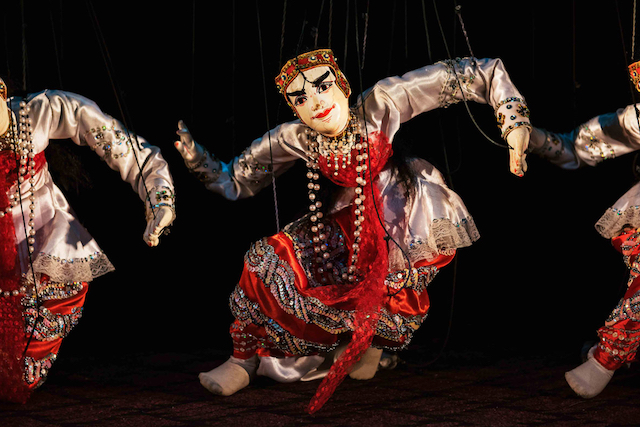
Photo � Chan Qu | Courtesy NEOCHA  The string puppets of Myanmar (previously known as Burma) are called Yoke Th� ( meaning "miniatures"). It originated from royal patronage and were gradually adapted for the wider populace. The puppets or marionettes are intricately made, and require considerable dexterity as they are "controlled" by 18 or 19 wires for male and female characters respectively, especially as each puppet can only be controlled by only one puppeteer. It is thought that Burmese marionettes originated around 1780 and were introduced to the courts of the time by a Minister of Royal Entertainment, U Thaw. Little has changed since the creation of the art, and puppet characters are still used today. However, the art went into decline during the colonization of Upper Burma by the British in November 1885 following the Third Anglo-Burmese War. It is said that because the puppets were mere wooden dolls, their �speech�, although voiced by humans, was allowed more...
Lidia D�Opera | Venice

Venice by Lidia D'Opera on Exposure After so much focus on Southeast and South Asia on the pages of The Travel Photographer blog, I think my readers and I are ready for a change of geography...and Venice and its famous carnival is probably one of the most jarring, but visually breathtaking- segue from one region of the world to another. The Carnival of Venice (known locally as Carnevale di Venezia) ends with the Christian celebration of Lent, forty days before Easter, on Mardi Gras, the day before Ash Wednesday. To make it simple, it will be held between the dates of February 11-28, 2017. It is known for its elaborate costumery and masks. While it is uncertain as to the reason for the earliest mask wearing in Venice, it is said by some that covering the face in public was a unique Venetian response to one of the most rigid class hierarchies in European history back in the 13th century. There are distinct types of masks with names such as Bauta, Colombina, The Plague Doctor, Moret...

Shankar Subramanian | Hornbill Festival - Nagaland

Image
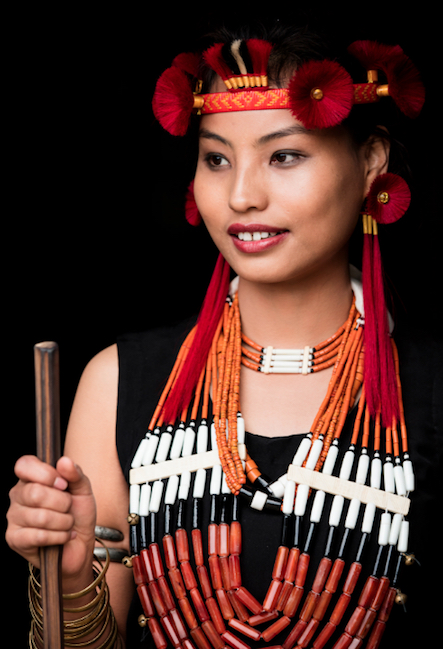
Photo �  Shankar Subramanian - All Rights Reserved I may consider myself as an old hand in India, but I cannot justify the reason for not having been to its "seven sisters" yet. The Seven Sister States are India's contiguous states of Arunachal Pradesh, Assam, Meghalaya, Manipur, Mizoram, Nagaland and Tripura in northeastern India...and this is a huge blot on my record. One of Nagaland's most attractive festivals is the Hornbill Festival, named after the bird, and which is one of the largest celebrations of its indigenous warrior tribes, who live in India's far north east region. The hornbill bird is particularly revered by the Nagas and is reflected in tribal folklore, dances and songs. The festival is organized by the state government and is attended by all of Nagaland's major tribes. It features traditional arts, dances, folk songs, and games. So it's with pleasure that I feature Shankar Subramanian's Hornbill Festival photo gallery. He has photog...

The Travel Photographer Is 10 Years Old !

Image
The first blog post   Shakespeare  wrote   �...the   swiftest   hours,  observed  as   they   flew...�   And indeed, the ten years since I started this blog have flown swiftly, and many milestones have been reached during that decade. Over 3400 posts. Almost 4,000,000 unique views. Over 900 travel photographers were written about; some multiple times. Over 2000 followers. Over 400 posts on India, and over 130 posts on Vietnam. More than 200 Point Of Views...some acerbic, some rants, some wide-off-the-mark, some spot-on. Personal opinions on cameras and lenses (my own tools) that I use and take on my travels. According to statistics, its readership is worldwide, and stretches from the United States to Japan. I frequently receive complimentary and thank you emails (or social media comments) from readers and from featured photographers. I started the blog whilst in London in January 2007; on a whim and named it The Travel Photographer becau...

Diane Durongpisitkul | Chinese Opera In Thailand

Image
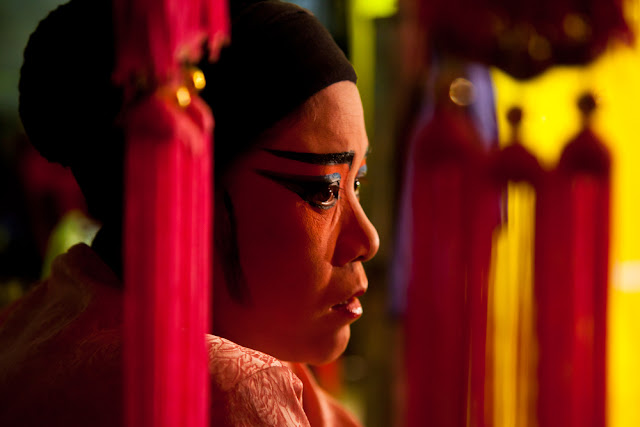
Photo � Diane Durongpisitkul - All Rights Reserved "I'm a wanderer who happens to own a pretty nice camera."  I like that quote because its simplicity and humor...and I also like the length and breadth of Diane Durongpisitkul's photographic work....and admire its variety. I feature Diane's work on the backstage world of a travelling Chinese Opera in Thailand , as this genre is also one I am interested in, and hopeful of finding enough time to start a long term project on before it evaporates from the pressures of modernity.  These performers seem caked in make-up, and carry on an art form under threat by changing cultural habits and demographics. Chinese opera -aside from China and Taiwan- is progressively getting forgotten, and soon may vanish as new generations ignore it, and are disinterested in this ancient 'imported' art form. The Chinese Opera troupes around Thailand are usually commissioned by Chinese temples, and may travel the country ext...

POV: Asia Society's "Tin Ear"

Image
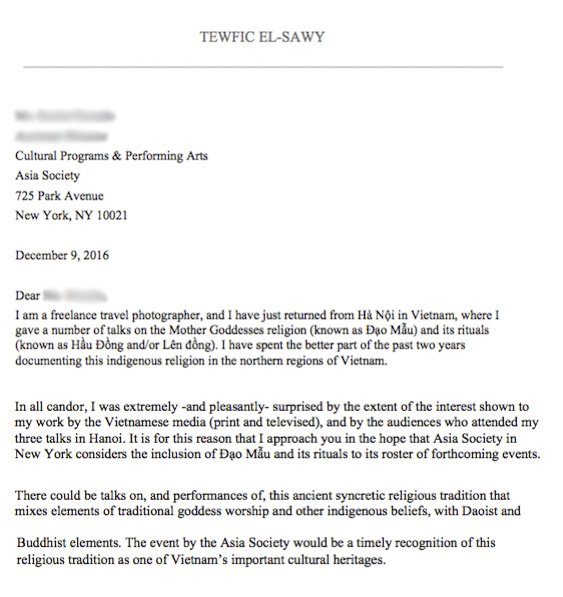
As readers of this blog know, I spent the better part of the past two years on a wonderful project documenting/photographing/researching the indigenous Vietnamese Mother Goddesses religion (known as �?o M?u) and its rituals (known as H?u �?ng and/or L�n d?ng) in H� N?i and in the northern regions of Vietnam. A few weeks after the birth and publication of my photo book H?u �?ng: The Spirit Mediums of Viet Nam , �?o M?u was inscribed on the UNESCO Representative List of the Intangible Cultural Heritages of Humanity. This prestigious acknowledgement was received in Vietnam with enormous nationalistic pride as it honors its heritage, and I was privileged to have had the opportunity to give three talks and multiple television interviews about my book, the project and how a non-Vietnamese was able to acquire an expertise in these rituals. On returning to New York City, still reeling from the euphoric feeling of having done a meaningful project, I decided I would try to interest one of the p...

Mattia Passarini | Inked Faces

Image
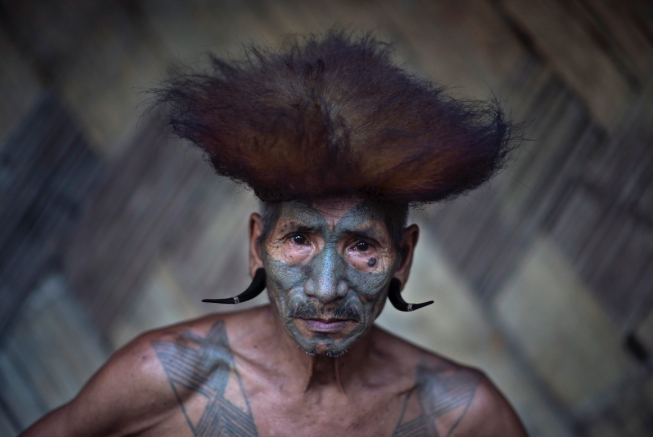
Photo � Mattia Passarini - All Rights Reserved The word tattoo is derived from the Tahitian "tatu" which means "to mark something." It is claimed that tattooing has existed since 12,000 years BC, and its purpose has varied from culture to culture and from era to era. The recent tattoo popularity in the Western world most probably has its origins in Egypt during the time of the construction of the great pyramids. When the Egyptians expanded their empire, the art of tattooing spread as well. The civilizations of Crete, Greece, Persia, and Arabia picked up and expanded the art form, and China joined in around 2000 BC.*  Inked Faces by Mattia Passarini is a gallery featuring various tribal individuals sporting intricate tattoos. I found the most extreme to be the Ramnami of Chhattisgarh who tattoo the word "Ram" on their whole bodies. Also included are the Konya, the Khonds, the Baga, the Apatani; all from the far reaches of India. The Chin of Burma, the Li a...